|
||||||||||||||||||||
White cake was a challenge! Every recipe I had tried in the past turned out very poor. They often tasted like eggs and cooked milk. The top was usually crisp, and the consistency quite dense. The previous recipe I had posted was good, but a little dry, this one is moist and delicious! Give it a try, let me know what you think. |
||
|
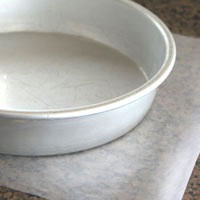
Spray the bottom of the pan with cooking spray and place the prepared paper inside. Smooth out any air-pockets and seal around the edges. |
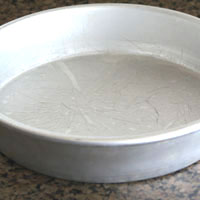
Spray and flour the paper and edges. Shake out any excess. Set aside. |
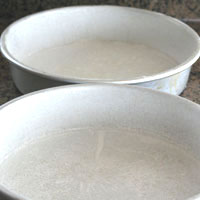
I used to make two nine inch round cakes and cut them in half. It was a crumbly and annoying process so I started using three pans and it's just right! Each layer is the perfect thickness and it has the elegant look of three layers. |
||
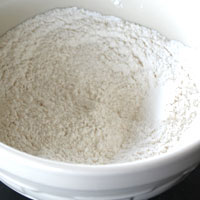
Combine cake flour, baking powder and salt in a medium bowl. Set aside. |
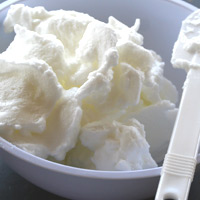
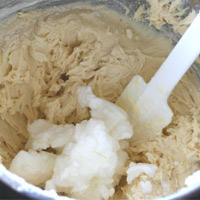
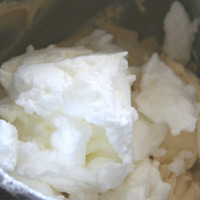
In a bowl of an electric mixer add egg whites. Beat until stiff peaks form 3-5 minutes. Gently transfer to another bowl. |
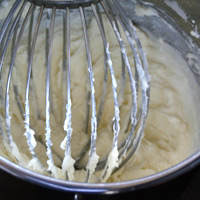
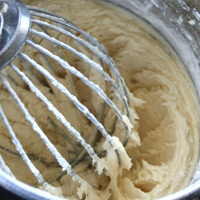
In the bowl used for the egg whites, add the butter, sour cream, and sugar. Beat on high until smooth and light 3-5 minutes. |
3 c (12 oz) cake flour 2 t baking powder 1 t salt 4 egg whites 1 c (8 oz) unsalted butter at room temperature 2 c sugar 4 egg yolks 1 T vanilla 1 c (8 oz) sour cream The fresher the eggs, the quicker stiff peaks will form. Older eggs will still firm up, they just take longer. Don't overbeat or it turns clumpy and smells badly. Throw it out if you do and start over. Cake flour creates a very fine, soft crumb. If you substitute with all-purpose flour do so by weight not volume. So still use 12 oz which is only 2 1/3 cups rather than 3. In a chocolate cake all-purpose flour works great, but for a white cake I definately recommend using cake flour. |
||
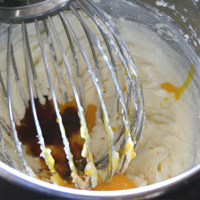
Add egg yolks and vanilla, beat until incorporated. |
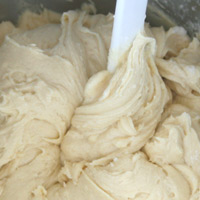
With the mixer on low add the flour mixture one cup at a time until it is all added. Beat on high 20-30 seconds. |
|
|
(folded) |
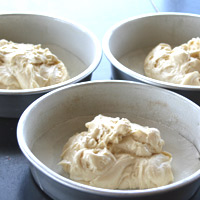
Divide among the prepared pans. |
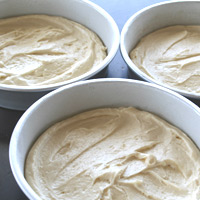
Gently spread to level the batter. |
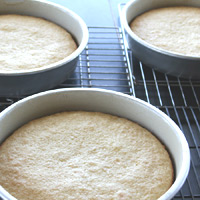
Bake for 20 minutes until the cakes spring back gently when touched. |
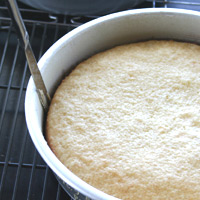
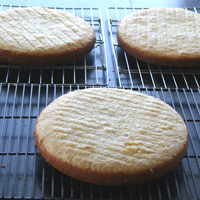
Remove from oven and place on a cooling rack. Let cool for ten minutes, then run a knife along the sides. |
|
More pans with less mixture in each will reduce the baking time. Fewer pans with more mixture will increase the baking time. Traditionally to tell if a cake is done a toothpick or knife is inserted into the center. I don't like to do this, it deflates cakes that aren't done. Gently touch the middle of the cake. If it feels jiggly it isn't done. If it just barely springs back or gives a little resistence it is done and should be removed from the oven. It may seem a bit under-done, but will continue to bake while it sits. If it is very firm, it is over-done. |
||
|
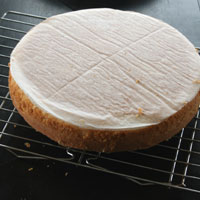
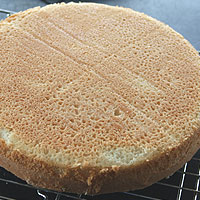
Remove the parchment paper. You can let it cool like this, but I like to flip it one more time to have the domed side up. |
|
|
It's important to cool a cake completely before frosting it. The heat of the cake will melt the butter in a frosting. |
||
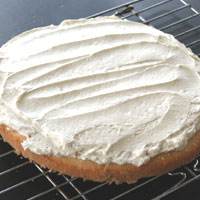
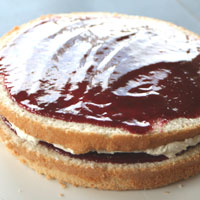
Place one layer on a cake platter. Put a thin layer of frosting on top. Top that with half of the raspberry filling. |
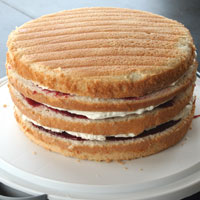
Place the next layer on top and repeat. |
Place the top layer on. |
Gently frost it or the raspberry filling will come out. It it does, clean it off before frosting that area. |
||
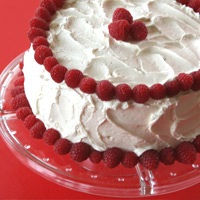
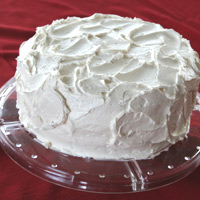
Frost the sides and top. |
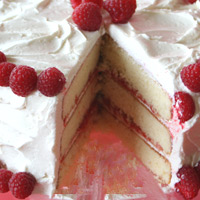
Garnish with raspberries. |
Slice and serve! |
|
Problems Cake flour vs all purpose flour: Cake flour creates a very fine, soft crumb. If you substitute with all-purpose flour do so by weight not volume. So still use 12 oz which is only 2 1/3 cups rather than 3 cups. In a chocolate cake all-purpose flour works great, but for a white cake I definately recommend using cake flour. Sliding Cake: Putting a layer of buttercream and raspberry filling together will make it slide a bit. If you have to transport it use only the raspberry filling between the layers. If it is staying where you made it, it probably won't slide much and I think it's worth it to have the double layered filling. Seeded Jam: This is a smooth soft cake and having seeds in the jam would be distracting. Also, if there are pieces of fruit it won't spread as nicely or lay as evenly. Delayed Baking: The egg whites will deflate over time. It is best start preheat the oven before you start mixing the cake and bake it as soon as the egg whites are folded in. Testing Flour: A cake that sinks down in the middle generally doesn't have enough flour. A cake with a stiff dome or that doesn't rise much has too much flour. A proper cake should be level or dome slightly. |
||
White Cake 3 c (12 oz) cake flour 2. Combine (2)cake flour, baking
powder and salt in a medium bowl. Set aside. In a bowl of an electric
mixer add egg whites. Beat until (3)stiff peaks form 3-5 minutes.
Gently transfer to another bowl. Raspberry Filling Frosting Notes |
||
Recipes