|
||||||||||||||||||||
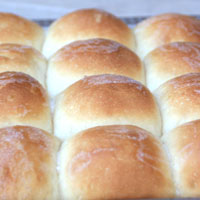
I thought that once I perfected a roll recipe I could shape it any way and get similar results. I was wrong. I got my crescent rolls right and love them shaped as crescent rolls, but they taste terrible shaped as round rolls. To get light and airy round rolls here a few things that I learned. |
||
1. They can't handle eggs or too much butter in the dough, it weighs them down. |
||
|
|
|
Heat a little more milk than the recipe calls for in the microwave 3-4 minutes or until it boils rapidly. |
Re-measure it. If a lot has evaporated add a little milk to make up the difference. Set in the refrierator to cool for later use, or in the freezer to cool immediate use. Once the milk is cool it is ready to use. Stir in the yeast and let it sit for a few minutes. |
|
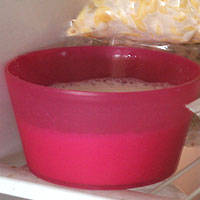
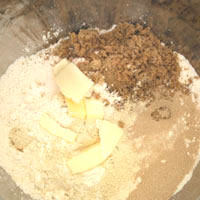
1 1/2 c plus 1 T (12.5 oz) scalded then cold milk 3 c plus 2 T (15.5 oz) all purpose flour 2 T (.5 oz) gluten 1/4 c (2 oz) brown sugar 2 T (1 oz) unsalted butter at room temperature 1 1/2 t salt 1 T yeast This is called scalding the milk. It denatures a protein that attacks the gluten. I like to remeasure it into a plastic bowl to cool. Glass holds heat longer than plastic so it takes too long to cool. The cold temperature of the milk holds the dough together better. It is a sticky dough, so it has a hard time holding together and will not knead thoroughly if the milk is warm. |
||
|
|
||
|
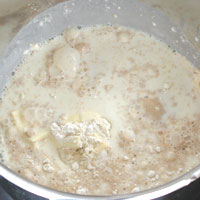
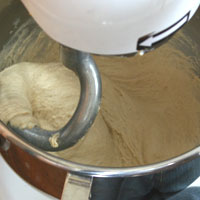
Add the milk & yeast mixture. Knead 8-10 minutes. Scrape the bowl down after 1, 4, and 7 minutes. |
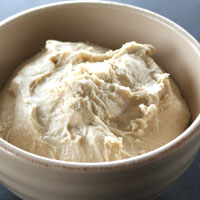
The dough will be very sticky and will not clean the sides of the bowl. It should be able to hold a shape however. |
Place it in a lightly greased bowl. |
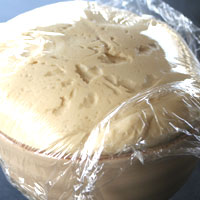
Cover with plastic wrap and ferment 90 minutes. You can also refrigerate it at the point up to 24 hours. The dough should double in volume. |
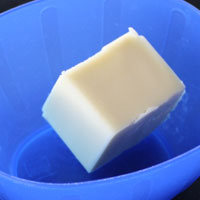
Bring the butter to room temperature. |
2 T salted butter (for shaping) |
||
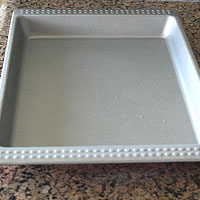
Spray a 9 x 12 inch pan with cooking spray and set aside. |
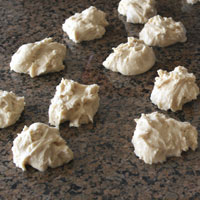
Divide the dough into 12 equal pieces. Eyeball it or weigh it at 2 1/4 oz each. |
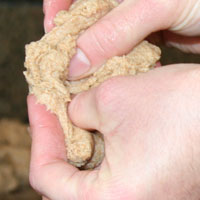
To form a roll pick up one of the pieces and use both thumbs to push the dough through at the center. |
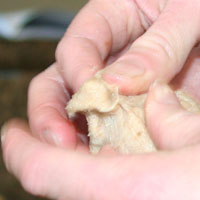
Bring the rest into the hole you have created and pinch the bottom. |
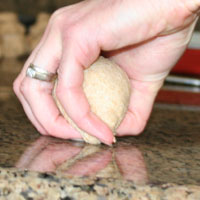
Continue to pinch the bottom to stretch the dough tightly into a ball. |
|
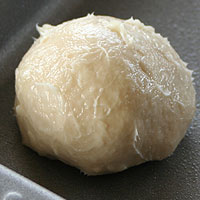
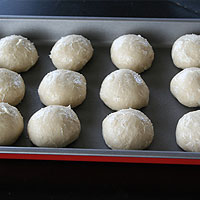
Roll the dough in the butter and place it on the prepared pan. |
Repeat with the remaining rolls. Place the rolls close enough together so they can rise and bake touching each other. Do not overcrowd however, or they will not have room to fully rise. |
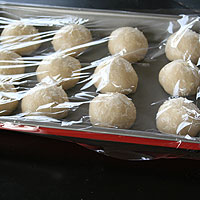
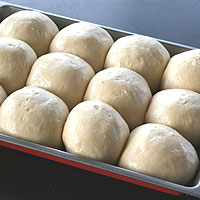
Cover and proof 1 hour, or refrigerate up to 24 hours. If you refrigerate it, remove it 2 hours before baking. |
Preheat oven to 350, 15 minutes prior to baking. Bake the rolls 18-20 minutes. They start to look done about 15 minutes, but they will be doughy in the middle. |
Bake them until the tops are nice and brown and they are cooked all the way through. Let sit on pan 5 minutes before moving. They can also cool on the pan. Great served hot or cold. Best eaten the same day. |
|
|
Bundt Pan Rolls
|
||
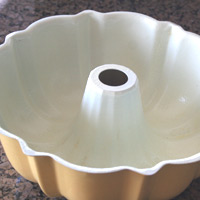 Follow the directions above until they are ready to shape. Spray a bundt pan well with cooking spray. |
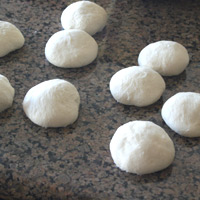 Divide the dough into 16 even pieces. Shape the dough as described above. After they are all shaped slightly flatten each piece. |
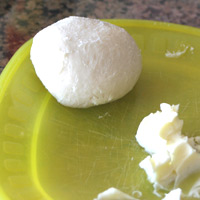 Evenly and thinly coat each roll completely. |
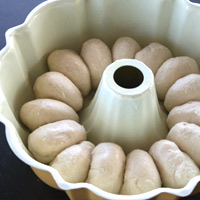 Place upright in prepared pan. |
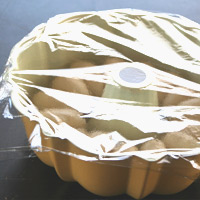 Cover with plastic wrap and rise 2-3 hours until the dough rises above the rim. You can refrigerate the dough immediately after shaping up to 12 hours in the refrigerator. Allow extra rising time. |
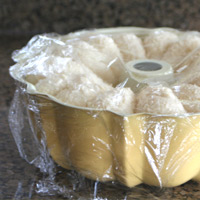 Heat oven to 350. Bake 20 minutes until quite brown on top. |
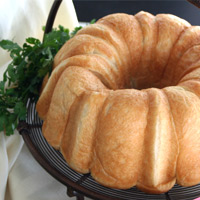 Remove from oven and immediately invert to remove rolls onto a cooling rack. Serve hot or at room temperature. They are best the day they are made. |
||
The bundt pan rolls will be quite brown on the top, but baking them less than this will leave you with doughy rolls. |
||
|
Problems I wish I had taken pictures of all the failures I had making these. I have them listed in the top paragraph, but I'll explain more here. Heavy dough - the round roll shape can't take a heavy dough or it will not rise. A crescent roll is longer and the dough is more spread out, so they can handle a heavier dough and still be light and airy Water or milk?- Water was easier to use because the consistency of the roll was much lighter. It was really lacking in flavor however, so I adjusted the flour and liquid proportions to get it right Butter or oil?- oil works great for breadsticks, but butter was the clear winner for round rolls Sticky or stiff dough? - the dough for these rolls needs to be as sticky as possible while still able to hold their shape. The stickiness lets them rise and bake together supporting each other. It creates a very light and airy roll. If they are so sticky that they can't hold their own shape, they won't rise or bake high enough. Placement - The rolls need to be close enough together that they will rise and bake touching each other. They should not be so close that they are overcrowded and cannot fully rise.
Doughy Bundt Rolls- The
bundt pan rolls will be quite brown on the top, but baking them less than
this will leave you with doughy rolls. |
||
|
Round Rolls 1 1/2 c plus 1 T (12.5 oz) scalded then cold milk 2 T salted butter 1. Heat a little more milk than the recipe calls for in the microwave 3-4 minutes or until it (1)boils rapidly. Re-measure (2)it. If a lot has evaporated add a little milk to make up the difference. Set in the refrierator to cool for later use, or in the freezer to cool immediate use. Once the milk is (3)cold it is ready to use. Stir in the yeast and let it hydrate for a few minutes. 2. Measure the remainder of the ingredients except the 2 T salted butter in a bowl of an electric mixer. Add the cold milk and knead 8-10 minutes. Scrape the bowl down after 1, 4, and 7 minutes. The dough will be very sticky and will not clean the sides of the bowl. It should be able to hold a shape however. Place it in a lightly greased bowl. Cover with plastic wrap and ferment 90 minutes. You can also refrigerate it at the point up to 24 hours. The dough should double in volume. 3. Bring the 2 T butter to room temperature. Spray a 9 x 12 inch pan with cooking spray and set aside. Divide the dough into 12 equal pieces. Eyeball it or weigh it at 2 1/2 oz each. To form a roll pick up one of the pieces and use both thumbs to push the dough through at the center. Bring the rest into the hole you have created and pinch the bottom. Continue to pinch the bottom to stretch the dough tightly into a ball. Roll the dough in the butter and place it on the prepared pan. Repeat with the remaining rolls. Place the rolls close enough together so they can rise and bake touching each other. Do not overcrowd however, or they will not have room to fully rise. Cover and proof 1 hour, or refrigerate up to 24 hours. If you refrigerate it, remove it 2 hours before baking. 4. Preheat oven to 350, 15 minutes prior to baking. Bake the rolls 18-20 minutes. They start to look done about 15 minutes, but they will be doughy in the middle. Bake them until the tops are nice and brown and they are cooked all the way through. Let sit on pan 5 minutes before moving. They can also cool on the pan. Great served hot or cold. Best eaten the same day. Bundt Pan Rolls 2. Spray a bundt pan well with
cooking spray. Divide the dough into 16 even pieces. Shape the
dough as described above. After they are all shaped slightly flatten
each piece. Evenly and thinly coat each roll completely. Place
upright in prepared pan. Cover with plastic wrap and rise 2-3 hours
until the dough rises above the rim. You can refrigerate the dough
immediately after shaping up to 12 hours in the refrigerator. Allow
extra rising time. Notes |
||
Recipes