Pan Searing is Fun
Sierra Hansen

See all of Sierra's Recipes
(2 new: cranberry porkchops & au gratin potatoes)
View all Articles

March 2010
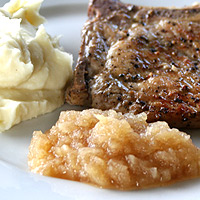
This method of cooking meat is so versatile that I thought it was worth exploring in greater depth.  If you are not into lengthy explanations of simple things, skip right to the recipes.  Give Ashley’s Curry Chicken a try or my Cranberry Pork Chops.  For a quick meal, sear some chicken for a salad.  The result is tender and moist meat that is great sliced on just about anything.  (Just follow the directions under Curry Chicken.) 

When you pan-sear, the idea is to create color on the meat.  You want to develop a brown crust, and the more color the better.  That brown caramelized crust comes from the moisture evaporating out onto the hot pan, and there are a few rules to making this
glorious event come to pass.

First, you need the right kind of pan.  While people disagree on this (mostly the makers of non-stick and Teflon I think), I prefer a stainless steel sauté pan to the non-stick variety because you can get a richer color on the meat. 

Secondly, you don’t want to overcrowd the pan, or you will end up steaming your meat instead of pan-searing it.  Give everything space to breathe and turn up the heat. 

Perhaps the most important rule however, is to just leave the meat alone.  Once it touches the pan, don’t move it.  Yes, it will stick to the pan at first, but once the crust forms, you can easily flip it over.  Remember, you are aiming for color.  (But, seriously, this isn’t blackened chicken.  Brown is what you want.)

Once both sides have a nice brown crust, you can finish cooking the meat all the way through in the oven or by covering the pan and turning the heat down to low.  If you cook the meat completely in the oil, however, you have crossed over from pan-searing to frying because you’ll need to add more oil to keep it from burning, and now you’re in a whole new calorie range.

Meat that has been pan-seared is moist and flavorful, not to mention ready in under ten minutes.  It’s certainly my go-to method for a quick meal that tastes like you spent a long time in the kitchen.

View All Articles

Fresh From the Freezer
Septemeber 2009

We live in the age of convenience food, where everything is available all the time.  Eating strawberries in January, however, is possible but pricey.  Those bell peppers that where 5 for a dollar the other day, will go as high as $2.00 each in the dead of winter.  That’s why now is the time to utilize your freezer full of popsicles and frozen entrées: throw that junk out if you have to, and make room for a winter stash.

Many fruits and veggies store well in the freezer, and processing them is simple.  Here is a short list of some items I store: 

- Strawberries and other berries
- Cantaloupe
- Pineapple
- Oranges
- Bell Pepper
- Homemade Pesto

To process, cut fruit or veggies into smaller pieces.  I cut strawberries in half, for example, and bell peppers into strips.  Arrange the pieces on a cookie sheet so that nothing is touching and let freeze for a few hours.  At this point, remove the cookie sheet from the freezer and bag the food in gallon freezer storage bags.  When you want to make a smoothie or cook fajitas, each piece is individually frozen for easy removal.  Produce will stay good for up to 6 months.

Pesto also freezes well and can be frozen in ice cube trays or Tupperware, depending on how much you want to use at once. 

Smoothies are one of my favorite ways to eat fruit out of season.  The frozen fruit helps keep the drink frosty, so I don’t even add ice cream to mine.  Here is a basic smoothie recipe that I alter depending on what fruit I have on hand:

1 apple, peeled and cored
1 orange, cut in pieces (frozen or fresh)
1 banana
1 C frozen strawberries
¼ C plain yogurt
2 spoonfuls of sugar (to taste)

You can also substitute ½ can frozen juice concentrate for the yogurt and sugar.  If the smoothie is too thick, add some milk (It won’t taste like a funky milkshake.  No one will even notice the milk, I promise).

Frozen Dessert

No discussion of freezer fare would be complete without dessert.  In my opinion, a well stocked freezer needs produce and dessert options.  Freezer meals, while nice, are hit and miss, but dessert is essential.  Four things I always have in my dream freezer:

-Fudge Sauce
-Chocolate Chip Cookies
-Cheesecake
-Cinnamon Rolls

Fudge Sauce and Cheesecake freeze exceptionally well, and there are a million reasons you might need them in a pinch: your husband invited company over and forgot to tell you?  Ice cream sundaes are ready when you’re not.  You signed up to bring dessert to something and your kids aren’t cooperating?  Cheesecake to the rescue!  Plus, it will give you a good excuse to make dessert when there aren’t enough people around to finish it off.

Cinnamon rolls are only good fresh, so I bake the entire recipe, eat half, and freeze the other half of the recipe for later.  I thaw out the rolls on my countertop and frost them right before we’re ready to eat.

Why do all that work for one-time enjoyment? 

View All Articles

Herbology 101

August 2009

Fresh herbs are an easy way to make the same old thing exciting again.  The flavor trade off when you use dry herbs is like substituting powdered cheese for the real thing: it’s just not the same.  Of course, those bottled savories still have a place, but why settle for second best when it’s the middle of the summer, and you can get fresh herbs so easily? 

There are some things to understand about fresh herbs that make the switch easier.  First, you need to determine if the herb is woody or soft: A simple touch test will do the trick. The woody herbs, like thyme and rosemary that come on a thick stem, can handle roasting in a chicken or boiling away in a soup, although they don’t need cooking and taste just as strong added at the end.  Softer herbs, on the other hand, don’t stand up to cooking at all and wilt if you apply too much heat.

If the herb is woody, you simply slide two fingers down the stem to remove the leaves.  If needed, you can chop the leaves into smaller pieces.  Thyme and rosemary are both excellent stuffed in the cavity of a bird before roasting as well as in soups and broths.  The flavors are rich and full when you add these fresh herbs, and you’d never guess it was the same old turkey or chicken noodle you’ve made before.

Other herbs are soft and fragrant, so you can eat them uncooked, like oregano.  Basil, another soft herb, is one of the most versatile I know. I like cutting basil into ribbons and adding it as a garnish.  It’s great in tomato sauce, salads, bruschetta, and soup.  You can even lay a couple of whole leaves inside a panini to create a great sandwich.  My favorite is tomato, mozzarella, and basil grilled on some artisan bread with a little garlic.  And of course, the all time classic for basil is pesto.  I dream about fresh pesto tossed with pasta all winter long because it’s that good.

As a side note, if you are using a dried herb, you need to unlock the flavor that is stored there.  In a soup or sauce that simmers for over half an hour or more, there isn’t much of a problem, although it will still taste better the next day.  On the other hand, sometimes there just isn’t time.  In that case, make sure to sauté the herbs in some oil for a few minutes.  Usually, I just add the herbs while I’m cooking the onion if the recipe calls for one.  The heat and the oil allow the flavors to unlock, and your recipe will be much more fragrant.

View All...


New...

Tangy Frozen Yogurt
Click on Desserts


Contact Us

© Ashley Nelson 2008